The Ultimate Guide to Using a Thermometer/Hygrometer for Reptiles
Creating the perfect environment for your reptile isn’t just about choosing the right enclosure or substrate—it’s also about ensuring the proper temperature and humidity levels. That’s where a reliable thermometer/hygrometer for reptiles comes in. If you’re new to reptile care or looking to upgrade your monitoring tools, this guide will walk you through why it matters, how to use it, and answer one of the most common questions: “Where do you put the thermometer in a reptile tank?”
Why Temperature and Humidity Monitoring is Critical for Reptiles
Reptiles are ectothermic animals, meaning they rely on their environment to regulate body temperature. Without proper heat and humidity:
They can develop respiratory issues.
Improper shedding may occur.
Digestive problems and stress levels increase.
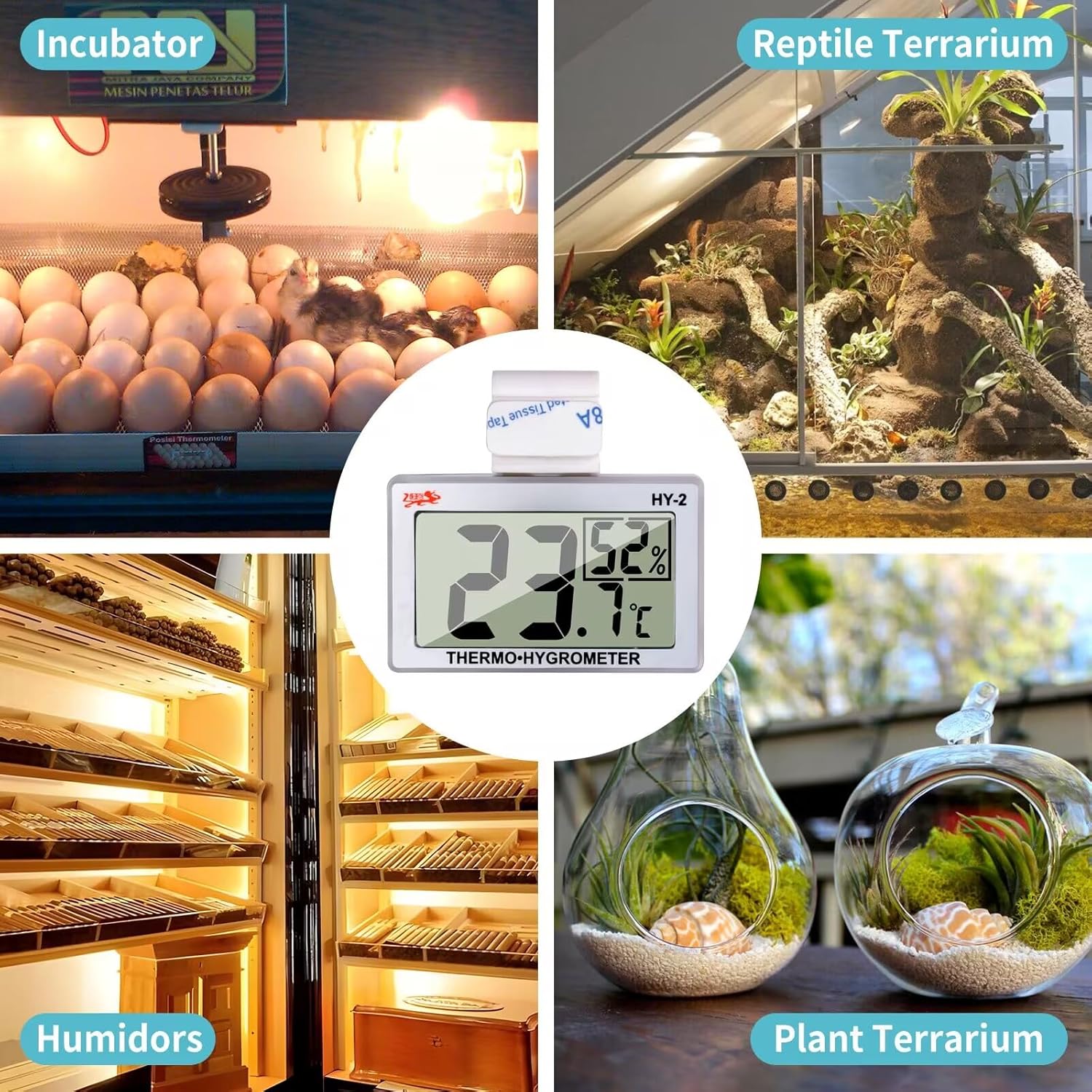
This makes a 2-in-1 electronic thermometer and hygrometer an essential tool for every reptile keeper. With both temperature and humidity displayed in one compact device, it provides accurate readings without cluttering the enclosure.
What Makes Our 2-in-1 Thermometer/Hygrometer Different?
Dual Monitoring: Simultaneously measures both humidity and temperature.
Compact Design: Small and discreet, it won’t disturb your reptile’s natural behavior.
Easy to Read: Clear digital display makes it quick to check at a glance.
Versatile Use: Suitable for reptile tanks, terrariums, and other enclosures.
Unlike bulky devices, this thermometer for reptile tanks is designed to blend in, ensuring accurate monitoring without taking up valuable space.
Where Do You Put the Thermometer in a Reptile Tank?
This is one of the most common—and most important—questions reptile owners ask. The placement of your thermometer and hygrometer directly impacts how accurate your readings are.
👉 Best Practices for Placement:
Basking Area – Place one thermometer near the basking spot to measure the warmest point.
Cool Zone – Place another device or probe on the opposite end to ensure your reptile has a temperature gradient.
Mid-Level Humidity Check – Since humidity can vary inside the tank, position the hygrometer sensor at mid-level height where your reptile spends most of its time.
For enclosures with only one 2-in-1 thermometer/hygrometer, we recommend putting it in the middle of the tank—not too close to heat lamps or misting areas—to get an average reading of the environment.
Tips for Maintaining Stable Tank Conditions
Regularly Check Readings: Monitor both day and night since temperatures fluctuate.
Adjust Heat Lamps or Mats: Use the thermometer’s readings to fine-tune heating equipment.
Maintain Proper Ventilation: Prevent humidity from spiking too high.
Mist as Needed: Based on hygrometer readings, increase or decrease misting to keep humidity within safe levels.
Final Thoughts
A high-quality thermometer/hygrometer for reptiles is not just an accessory—it’s a necessity for the health and well-being of your reptile. Our compact 2-in-1 electronic thermometer and hygrometer makes it easy to track both temperature and humidity without disrupting your reptile’s habitat.
So, the next time you ask yourself, “Where do you put the thermometer in a reptile tank?”—remember that correct placement ensures accurate readings, helping you create a safe, comfortable environment your reptile can thrive in.